

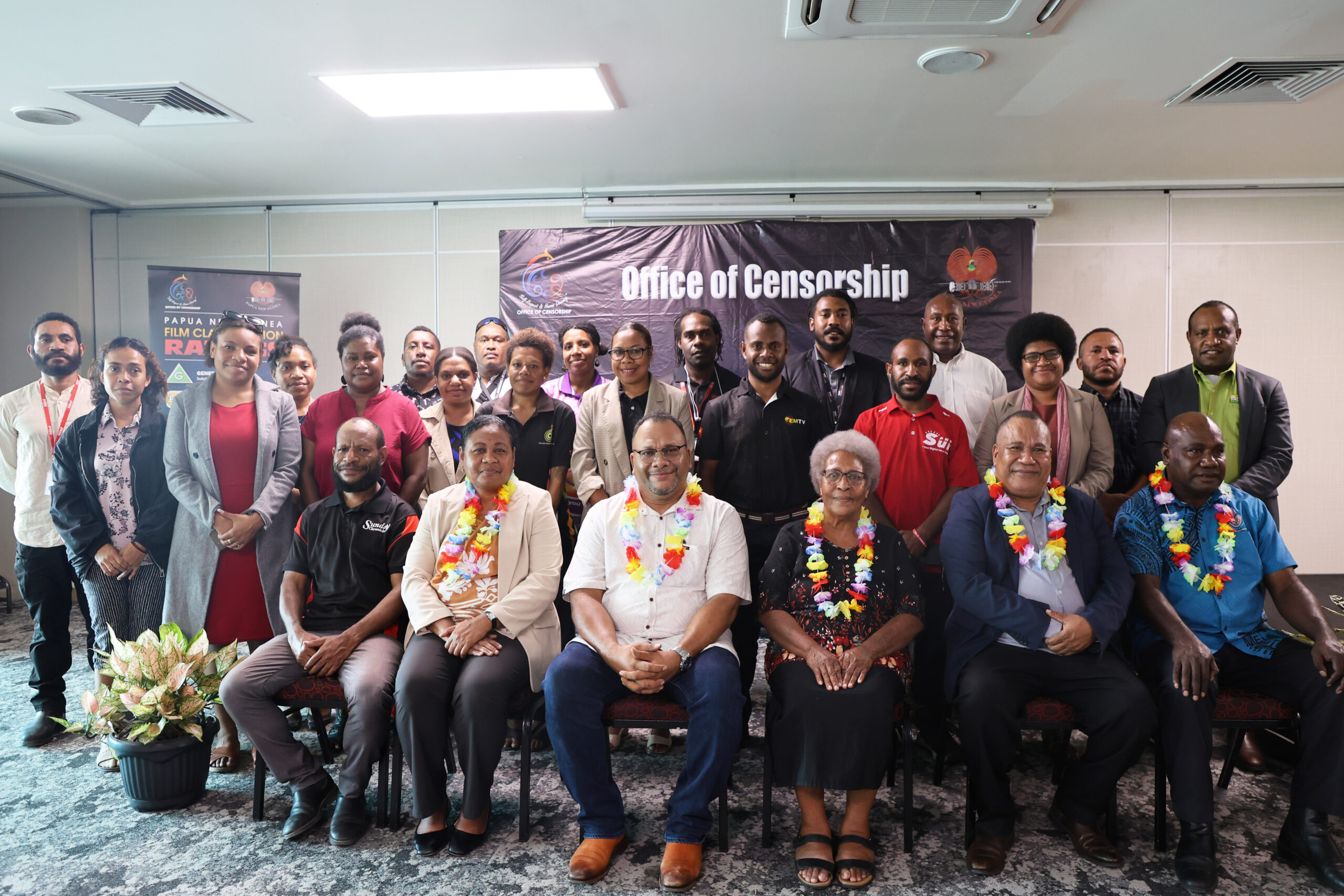
The Office of Censorship successfully hosted a Media Information Session on Thursday, 9 July, at the Gateway Hotel under the theme, “Clarifying the Roles and Functions of the Office of Censorship and National Censorship Board.”
The session brought together representatives from media organisations and journalists to provide accurate information and strengthen public understanding of the distinct mandates, responsibilities and operational functions of the Office of Censorship and the National Censorship Board in accordance with the Classification of Publications (Censorship) Act 1989 and National Censorship Policy No. 2.
With the rapid growth of digital communication platforms, social media, entertainment media and online content, the Office emphasised the importance of ensuring that media organisations, stakeholders and the public have a clear understanding of censorship administration, classification processes and regulatory responsibilities in Papua New Guinea.
In her presentation, National Censorship Board Chairperson, Ms. Karen Haive, outlined the Board’s statutory roles and responsibilities under the Classification of Publications (Censorship) Act. Ms. Haive explained that while the Office of Censorship is responsible for the day-to-day administration and enforcement of the Act, the National Censorship Board provides policy direction, governance and oversight of Papua New Guinea’s classification system.
“The Board is responsible for determining classification policies, setting classification standards, issuing guidelines and ensuring these policies continue to evolve to address emerging platforms such as the internet and streaming services,” Ms. Haive said. She said the Board also has the authority to review and, where necessary, overturn classification decisions made by the Office of Censorship to ensure they remain consistent with the objectives of the legislation.
The Office of Censorship thanked all media representatives and stakeholders who attended and contributed to the discussions.
The Office remains committed to fostering transparency, accountability and informed public dialogue while continuing to work collaboratively with the media and other stakeholders to promote responsible communication, safe media practices and a well-informed society in Papua New Guinea.